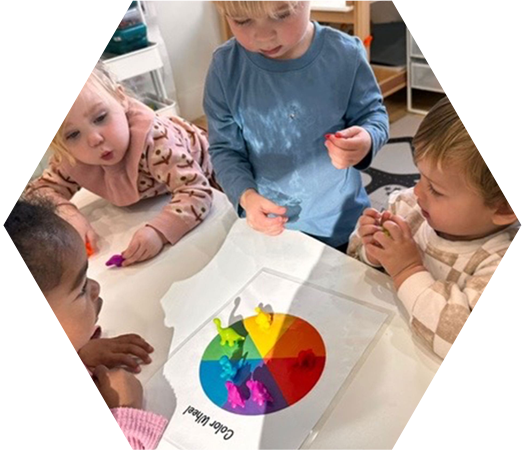

A child who chats nonstop at home may become quiet at school. Another may follow directions in the classroom but melt down the moment they get into the car. These differences can surprise parents, especially during the first few weeks of a new program. Is Your Child Acting Different at Preschool? When to Seek Extra Support is not a question with one simple answer, because behavior must be understood in context.
Preschool asks young children to manage separation, transitions, noise, group expectations, and new friendships. That is a lot for a developing brain. Families exploring Preschool should look for teachers who notice patterns, communicate clearly, and respond with curiosity rather than immediately labeling a child as “difficult.”
Changes at Preschool Can Be Normal
Temporary changes are common when a child begins preschool, returns after a break, moves classrooms, welcomes a sibling, or experiences a change at home. You may notice extra clinginess, sleep trouble, bathroom accidents, irritability, or exhaustion after school. These behaviors often improve as the child learns the routine and builds trust with teachers.
The key is to watch the pattern. Is the behavior becoming less intense over time? Does your child recover with reassurance? Are there still moments of play, connection, curiosity, and joy? A difficult drop-off by itself does not always signal a larger concern.
At Learning to Flourish, we look at the whole child rather than one isolated moment. Temperament, communication skills, sleep, hunger, sensory needs, relationships, and recent life changes can all affect the classroom day.
What Are the Behavior Problems With 3 Year Olds in Preschool?
Three-year-olds are still learning to wait, share, use words during conflict, and control strong impulses. Common struggles include grabbing toys, yelling, refusing transitions, running away from an activity, hitting when frustrated, or having a loud tantrum. These actions need guidance, but they can also be developmentally expected at this age.
What matters is frequency, intensity, duration, and safety. A brief outburst that improves with calm support is different from repeated aggression that causes injuries. Occasional refusal is different from a child who cannot participate in most parts of the day.
We have found that preschoolers respond best when adults teach the missing skill. Instead of only saying “stop,” a teacher might model “Can I have a turn?”, offer a redo, redirect the child, or help them breathe before trying again.
Why Does My Child Act Differently at School Than at Home?
Home and preschool place different demands on a child. At home, the environment is familiar and the child may receive more one-on-one attention. At school, they must process group instructions, share adult attention, handle noise, and move between activities on a schedule.
Some children hold their feelings together all day and release them at home because home feels safe. Others become unusually quiet at school because they are observing, anxious, or unsure how to enter play. Neither reaction should be judged from a single day.
Ask teachers what happens before, during, and after the behavior. A child who struggles before lunch may be hungry, while a child who becomes upset during cleanup may need warnings, a visual schedule, or a small transition job.
Is Your Child Acting Different at Preschool? When to Seek Extra Support
Extra support may be helpful when a change continues for several weeks, becomes more severe, or interferes with your child’s ability to learn, play, communicate, or feel safe. Pay attention when the same concern appears across settings or when parents and teachers independently notice a similar pattern.
Seek guidance sooner if your child loses a skill they previously used, rarely responds to people, cannot communicate basic needs, seems persistently distressed, or frequently hurts themselves or others. Sudden behavior changes can also be connected to illness, pain, sleep problems, or major stress.
Start with your child’s pediatrician and bring specific examples. The CDC’s Learn the Signs. Act Early. resources can help families review age-based milestones and prepare questions. Asking for help does not create a label; it creates an opportunity to understand what your child needs.
What Are the Signs That Early Intervention Is Needed?
Early intervention may be appropriate when there are concerns about speech, movement, play, learning, social connection, emotional regulation, or daily living skills. One missed milestone does not automatically mean a child has a delay. Persistent concerns, however, deserve attention rather than a wait-and-see approach.
Possible signs include very limited language for the child’s age, difficulty understanding simple directions, little interest in interactive play, extreme reactions to everyday sounds or textures, or frequent loss of control. A loss of words, social engagement, movement, or self-care abilities deserves prompt discussion with a healthcare professional.
Families can request an evaluation without a diagnosis. Ohio families with children under three can contact Help Me Grow Early Intervention, while families of children age three or older can ask their local public school district about a preschool special education evaluation.
How Do You Deal With Challenging Behaviors in Your Preschool Classroom?
Effective behavior support begins before a problem occurs. Predictable routines, clear expectations, movement, outdoor play, and warm teacher-child relationships reduce stress. At Learning to Flourish, our approach includes positive reinforcement, modeling, redirection, reminding language, logical consequences, and opportunities to redo a difficult moment.
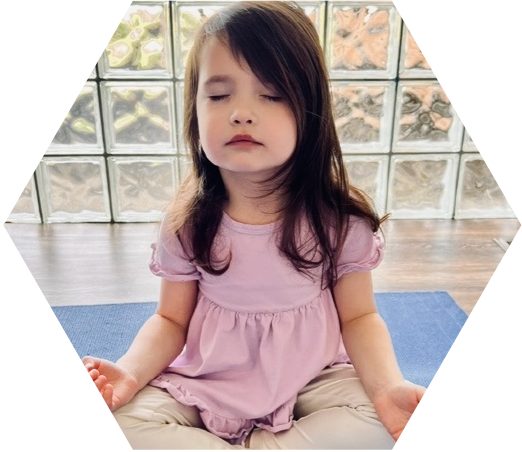
We also use breathing, yoga, mindfulness, and emotional-regulation strategies to help children reset. These tools do not excuse unsafe behavior. They help children calm their bodies so they can practice a safer response.
Consistency between home and school is powerful. A family and teacher might choose one phrase, such as “Hands are for helping,” and use the same language in both places. Small, shared goals usually work better than trying to fix every behavior at once.
Do Children Who Attend Preschool Do Better in School?
High-quality preschool can support language, early literacy, math, independence, social skills, and readiness for classroom routines. Still, attendance alone is not the entire answer. The quality of relationships, teaching, communication, and daily experiences matters.
The Best Preschool Programs do more than prepare children to recognize letters and numbers. They give children repeated chances to solve problems, express feelings, listen to others, recover from frustration, and build confidence.
Parents should look for a balanced day that includes guided instruction, self-directed play, creativity, movement, outdoor time, and social-emotional learning. For a broader look at healthy adjustment, read How To Know If Your Child is Thriving in Childcare.
How Parents and Teachers Can Work Together
Begin with a calm conversation rather than waiting for a crisis. Ask what the teacher sees, when it happens, what has been tried, and what helps your child recover. Share relevant changes at home without feeling that you must disclose every private detail.
For one or two weeks, keep brief notes about sleep, appetite, drop-off, pickup, toileting, transitions, and behavior. Teachers can track the setting, trigger, response, and outcome at school. Patterns often become clearer when everyone looks at the same information.
At Learning to Flourish, family partnership is part of supporting the child. Parents can communicate concerns, request an additional conference, and work with teachers on responsive goals. Good Childcare should make families feel heard, not blamed.

What Support Should Look Like
Support does not always mean therapy or a formal plan. Sometimes a child needs an earlier bedtime, a shorter goodbye, a visual schedule, more movement, a quieter transition, or extra practice using words during conflict. In other cases, a pediatrician, speech-language pathologist, occupational therapist, counselor, or school evaluation team may be helpful.
A strong plan should be specific and measurable. Rather than saying, “He needs to behave better,” the goal might be, “With one reminder, he will use a taught phrase or ask an adult for help before hitting.” Progress can then be reviewed and the strategy adjusted.
The Best Childcare will recognize that behavior is communication. Adults must protect the classroom while also asking what skill, support, or environmental change could help the child succeed.
Trust Your Concern Without Assuming the Worst
Parents know their children well, and teachers see children in a social setting that families cannot fully recreate at home. Both perspectives matter. Together, adults can distinguish a normal adjustment from a pattern that needs closer attention.
Is Your Child Acting Different at Preschool? When to Seek Extra Support should lead to observation, communication, and thoughtful action—not panic. Early support can be simple, and it can make daily life easier for the child, family, and classroom.