Children need both academic and social-emotional readiness before kindergarten, but being able to manage emotions, follow routines, communicate needs, and participate with others often makes it much easier to use emerging academic skills in a classroom. Knowing letters and numbers matters. So does being able to listen, try something difficult, and recover when something does not go as planned.
The question “Academic Readiness vs. Social-Emotional Readiness: What Does Your Child Need Before Kindergarten?” does not have to be an either-or decision. Kindergarten readiness is better viewed as a combination of early academic knowledge, independence, emotional regulation, communication, curiosity, and the ability to function within a group.
At Learning to Flourish, that whole-child perspective shapes how we approach early education. Academic learning has an important place in the day, but so do community meetings, outdoor exploration, self-directed play, yoga, mindfulness, creative projects, and opportunities for children to become more independent.
Academic Readiness vs. Social-Emotional Readiness: What Does Your Child Need Before Kindergarten? The Short Answer
A child who enters kindergarten knowing every letter but struggles to ask for help, separate from a parent, or participate in a group may have a difficult adjustment. At the same time, a socially confident child who has had very little exposure to books, numbers, writing, or classroom routines may need additional academic support.
The goal is balance.
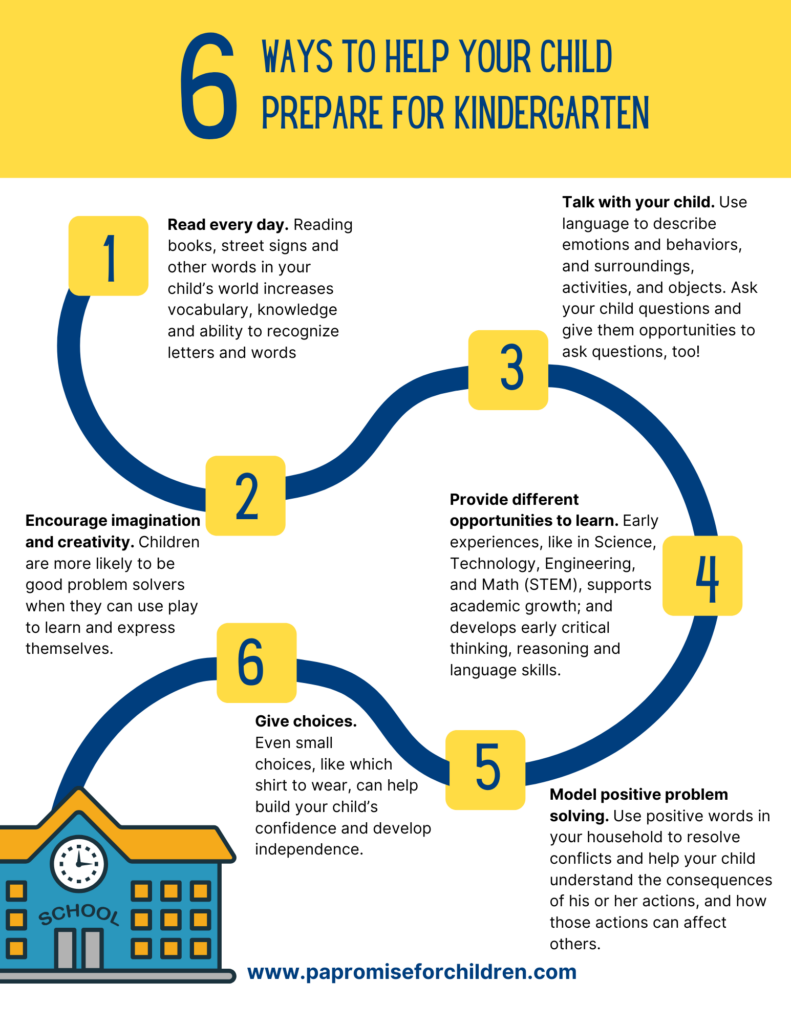
High-quality early childhood education should support different areas of development together rather than treating kindergarten preparation like a checklist that children must complete. The NAEYC Developmentally Appropriate Practice guidance similarly emphasizes learning experiences that support development across multiple domains while recognizing that every child develops as an individual.
That is an important distinction for parents. Readiness is not about turning a preschooler into a kindergartner early. It is about giving children the foundation they need to enter kindergarten ready to participate, learn, adapt, and grow.
What Does Academic Readiness Actually Mean?
Academic readiness does not mean your child needs to read chapter books, solve worksheets independently, or perform elementary-level math before kindergarten. Strong Preschool Readiness focuses on age-appropriate foundations that make future learning easier.
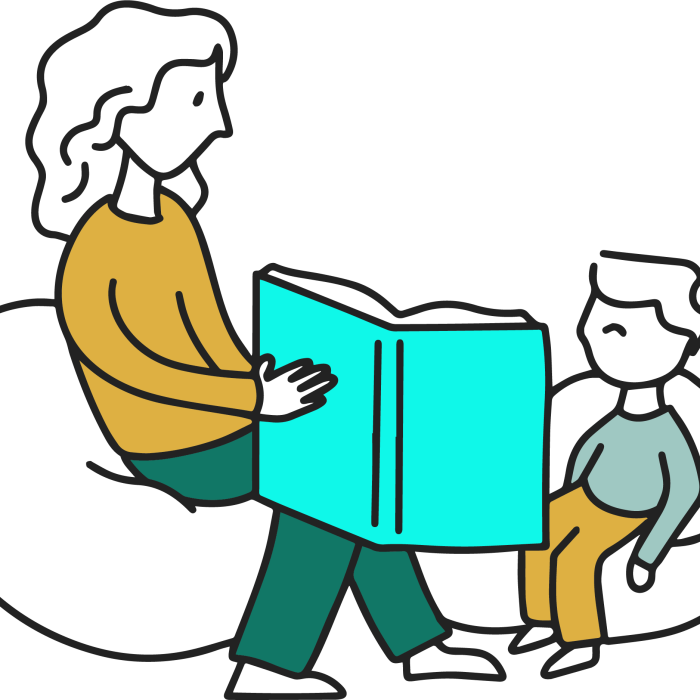
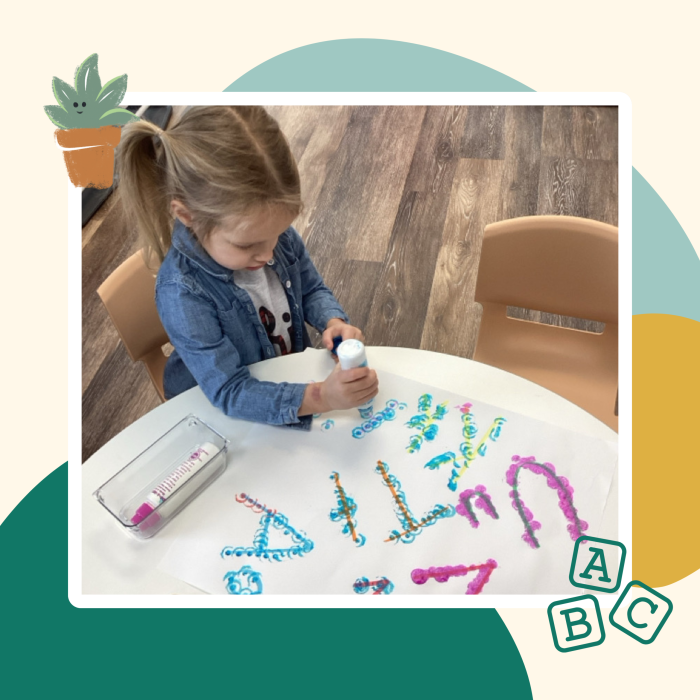
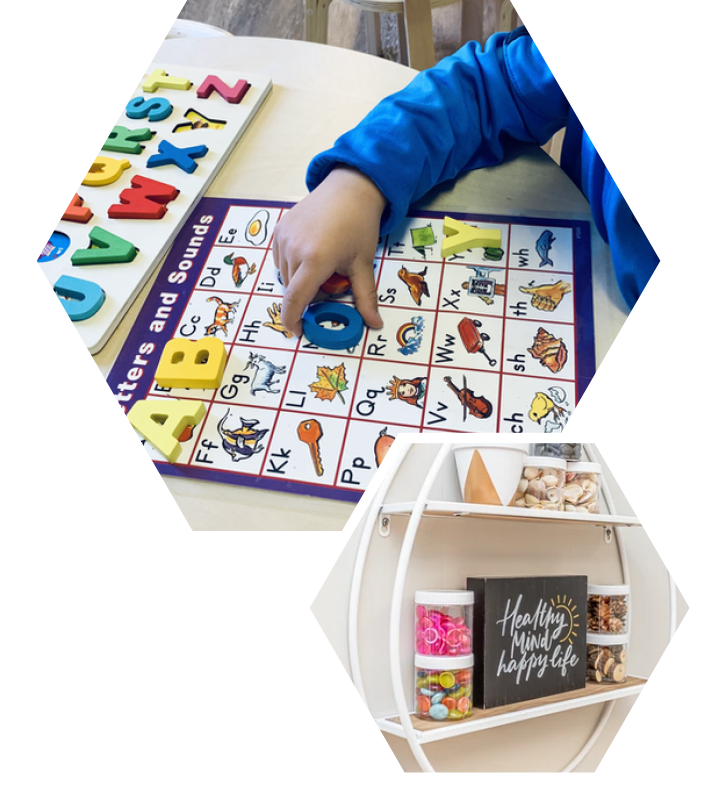
In literacy, that may include recognizing letters, understanding that letters represent sounds, enjoying read-alouds, noticing rhyming words, writing or attempting to write a name, and using an expanding vocabulary. Children also benefit from learning how books work, listening to stories, discussing characters, and explaining ideas.
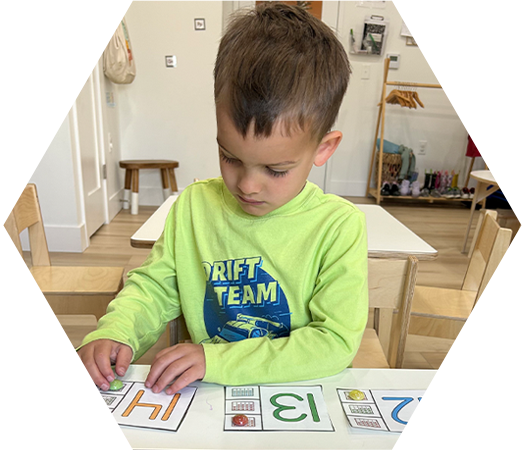
Early math is equally hands-on. Children can develop mathematical thinking by counting objects, identifying patterns, comparing quantities, sorting items, recognizing shapes, and experimenting with measurement.
At Learning to Flourish, early literacy happens in a play-based, print-rich environment using read-alouds, interactive activities, phonological awareness instruction, and visual, tactile, and movement-based learning. Collaborative Math uses manipulatives, Number Talks, games, patterns, counting, measurement, and other opportunities to explore mathematical ideas.
That combination matters because young children learn by doing.
What Is Social-Emotional Readiness?
Social-emotional readiness is a child’s growing ability to recognize emotions, communicate needs, interact with other people, handle frustration, and participate in a classroom community.
Before kindergarten, useful Pre-K Skills can include taking turns, listening when another person is speaking, following simple directions, joining play, waiting briefly, resolving small conflicts with support, and asking an adult for help.
Emotional regulation is another major piece. A kindergarten-ready child does not need to remain calm every second. Five-year-olds are still learning.
Instead, look for progress. Can your child begin calming down after disappointment? Can they accept redirection? Can they try again when something is challenging? Are they learning words to explain feelings rather than immediately reacting physically?
These abilities help children stay available for learning.
Why Social-Emotional Skills Affect Academic Learning
Imagine two children working on a new counting activity. Both understand numbers, but one becomes frustrated when the first attempt is incorrect and refuses to continue. The other is disappointed too, but accepts help and tries again.
Their math knowledge may be similar. Their ability to access that knowledge in a classroom is different.
This is one reason we place value on resilience, independence, active listening, and emotional regulation alongside traditional academics. At Learning to Flourish, daily community meetings encourage connection, gratitude, focus, and listening. Yoga and mindfulness introduce breathing, body awareness, and calming strategies that children can gradually learn to use when emotions become overwhelming.
These experiences are not separate from school readiness. They support it.
Independence Is an Often-Overlooked Kindergarten Skill
Parents naturally think about ABCs and 123s when preparing for kindergarten. Everyday independence deserves just as much attention.
Can your child attempt to put on a jacket? Open parts of a lunch? Use the restroom with age-appropriate independence? Keep track of basic belongings? Make a choice without an adult immediately deciding for them?
They do not have to master everything before the first day.
The goal is developing the confidence to attempt manageable tasks. Our approach to Child Development intentionally includes opportunities for independence through workshops, self-directed play, meals, classroom routines, outdoor learning, and transitions throughout the day.
A child who thinks, “I can try this,” carries an important skill into kindergarten.
Play Builds More Kindergarten Skills Than Parents May Realize
It can be tempting to assume that more worksheets automatically equal better kindergarten preparation. Young children, however, develop many important skills through purposeful play.
During imaginative play, children negotiate roles, communicate ideas, solve disagreements, practice vocabulary, create stories, and adapt when another child’s idea changes the game. Building with blocks introduces balance, spatial thinking, patterns, measurement, planning, and persistence.
Self-directed play also gives children something adults cannot completely teach for them: practice making decisions.
That is why strong Preschool Programs should provide opportunities for both intentional teacher-led instruction and child-directed exploration. Children need guidance, but they also need room to experiment.
Watch the Whole Child, Not One Milestone
Parents sometimes become concerned because another four-year-old can write every letter, count higher, or read simple words. Comparisons can make normal differences in development feel like problems.
A better question is: How is my child progressing across different areas?
At Learning to Flourish, even transitions between programs are approached by evaluating the whole child. Teachers and parents work together rather than relying only on age or one academic measurement to determine when a child is ready to move forward.
That philosophy is useful when thinking about kindergarten too. One skill should rarely define a child’s overall readiness.
Look at patterns. Is your child curious? Are communication skills improving? Are they becoming more independent? Can they participate in group activities for increasingly longer periods? Are early literacy and math concepts developing?
Progress across these areas tells you much more than one impressive skill.
How Parents Can Build Readiness at Home
Kindergarten preparation does not need to turn your home into another classroom. In fact, many of the best opportunities are already part of your day.
Read together and ask simple questions about the story. Count strawberries while preparing lunch. Ask your child to sort socks, carry their backpack, or choose weather-appropriate clothing. Let them order their own food occasionally or answer a simple question from another adult instead of immediately answering for them.
You can also practice emotional skills during real situations. When a tower falls or a game does not go their way, help your child name the feeling and think about what to do next.
Most importantly, allow manageable struggles. Helping is appropriate, but immediately solving every small problem can remove opportunities to build persistence.
Preparing for the Transition Into a School Environment
Even children with strong academic and social skills may need time to adjust to a new classroom. New adults, new classmates, unfamiliar routines, and separation from family can make the beginning of preschool or kindergarten feel very different.
Consistency helps. Talk positively and realistically about school, establish predictable morning and bedtime routines, and give your child opportunities to separate from caregivers in safe environments.
If your child is beginning preschool before kindergarten, our guide Starting Preschool? What Parents Can Expect During the First Few Weeks explains what families may experience during that transition and why adjustment often takes time.
Try not to measure success by whether your child walks into school without hesitation on the first morning. Readiness is developmental. Confidence grows through experience.
What Should You Look for Before Kindergarten?
By the months leading up to kindergarten, parents can look for a growing collection of skills rather than a perfect checklist.
Academically, children should be developing early literacy, language, handwriting, counting, pattern recognition, and mathematical thinking. Socially and emotionally, they should be making progress with communication, group participation, routines, independence, emotional regulation, and perseverance.
No child will be equally strong in every area.
The most meaningful question is whether your child has a foundation that can continue growing once kindergarten begins. The answer to Academic Readiness vs. Social-Emotional Readiness: What Does Your Child Need Before Kindergarten? is ultimately both. Children flourish when academic learning and well-being develop together.
At Learning to Flourish, that is why a Pre-K day includes early literacy and math alongside movement, outdoor exploration, yoga, studio projects, community meetings, reading, and self-directed play. Kindergarten readiness is bigger than what a child knows. It is also about how confidently, independently, and joyfully they are learning.