Early childhood education presents a dizzying array of options, and one of the most common questions we hear is “What’s the difference between boutique and traditional preschool?” As a small, family‑run school we hear this often during tours. When my own child was ready for school, I weighed the promise of rigorous academics against the intimacy of a smaller setting and wondered whether a boutique preschool could offer the same preparation as a more structured preschool. In this article I’ll share what I learned and help you decide what matters most for your family.
The short answer is that no single approach is “best” for every child. Some thrive in bustling classrooms with clear routines, while others blossom in close‑knit environments where learning is guided by curiosity. By understanding the key differences between boutique and traditional preschools, you’ll be better equipped to choose a program that aligns with your values and your child’s needs.
What is a boutique preschool?

A boutique preschool is intentionally small and relationship‑driven. It keeps class sizes low and prioritizes close connections between children, teachers and families. Research on small class sizes points out that when there are fewer children per teacher, each child receives more individual attention and better support. In our own classrooms, that 1:8 ratio allows teachers to see each child’s strengths and challenges, celebrate milestones, and adjust learning activities as needed.
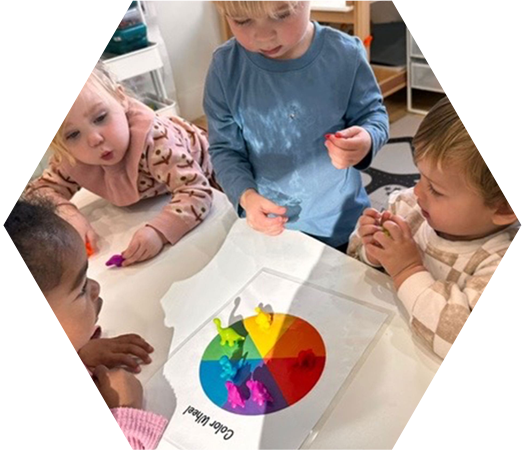
Boutique programs usually embrace a play‑based, child‑centered philosophy. Teachers act as facilitators, guiding children through hands‑on experiences rather than using worksheets and drills. Studies show that play‑based learning helps children develop creativity, social skills and emotional regulation. One longitudinal study found that children in child‑led preschools showed improved behavior and social responsibility as teenagers, and fewer work problems and arrests as adults. If you value flexibility, individualized learning and a strong community, a boutique preschool may be a good fit.
What is a traditional preschool?
Traditional preschools focus on preparing children for kindergarten through structured lessons and teacher‑led instruction. Children might practice writing letters, count objects, or complete worksheets. The classroom often resembles an elementary school, with circle time, group lessons, and daily schedules built around academic goals. Some children thrive with this predictability and structure, especially those who enjoy routine and direct guidance.
However, research suggests that an overemphasis on direct instruction at very young ages may limit creativity and increase stress. While practicing letters and numbers can be beneficial, it’s important that preschoolers also have time for imaginative play, social interaction, and self‑directed exploration. High‑quality traditional programs often blend academics with play to create a balanced curriculum. When evaluating a traditional program, ask how much time is devoted to open‑ended activities and whether teachers tailor lessons to individual interests.
Benefits of play‑based learning
Play isn’t just fun—it’s a powerful tool for learning. Unstructured, child‑led play builds capacities across physical, cognitive, emotional and social domains. Studies show that play improves executive function and self‑regulation, and open‑ended materials like blocks significantly enhance problem‑solving and creative thinking. When children are actively involved in their learning, they show better comprehension, vocabulary and math skills. These findings support the idea that a boutique preschool with ample play time can build a strong foundation for future learning.

Key differences between boutique and traditional preschools
The table below summarizes some of the major differences to help you compare at a glance. Individual schools may vary.
| Aspect | Boutique Preschool | Traditional Preschool |
|---|---|---|
| Class size | Small (often 1:6–1:8 ratio) | Larger (often 1:10–1:15) |
| Teaching style | Child‑led, play‑based | Teacher‑directed, academic |
| Environment | Home‑like, warm, personalized | School‑like, structured, standardized |
| Curriculum | Flexible, focuses on social‑emotional development and curiosity | Emphasizes literacy and numeracy through direct instruction |
| Family engagement | Frequent communication and daily updates | Scheduled conferences and general reports |
Factors to consider when choosing the best preschool programs
- Your child’s temperament: Does your child prefer quiet play or lively group activities? Sensitive children may flourish in a boutique preschool, whereas outgoing kids might enjoy the buzz of a traditional classroom.
- Teacher‑child relationships: Ask about class size and teacher turnover. Research suggests that consistent, nurturing relationships are crucial for early development.
- Curriculum philosophy and logistics: Consider whether the school aligns with your values about play, academics and creativity. Also think about location, hours and cost. While boutique programs may feel ideal, practical factors matter too.