What are the foundational skills for pre-K?
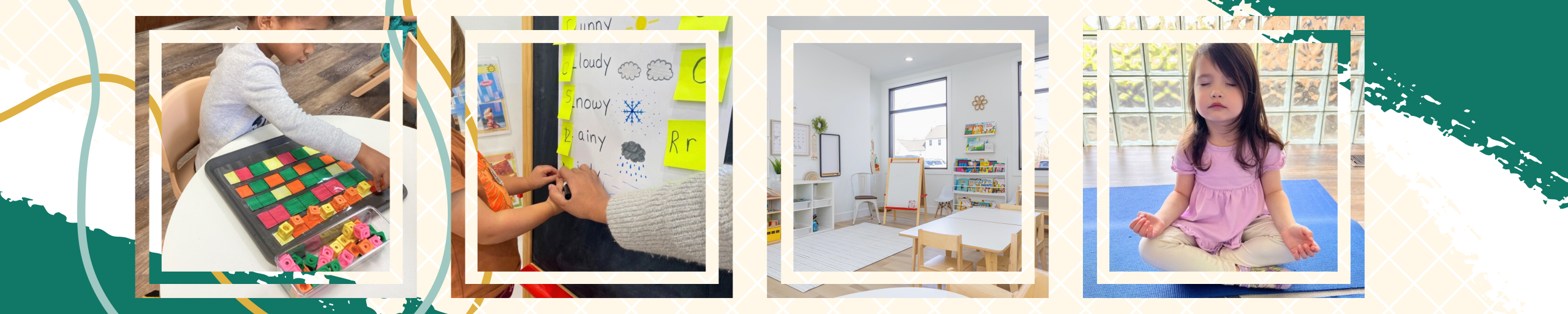
Pre-K is where confidence, curiosity, and community take root. We build the whole child—socially, emotionally, physically, and cognitively—through purposeful play and guided exploration. Daily routines create predictability; choice-time creates agency. Together, these experiences form the foundation that later reading, math, and problem-solving rely on. When families ask “What skills should a child learn in Pre-K?” we point to these fundamentals first.
Language & Early Literacy: What skills should a child learn in Pre-K?
Pre-Kers grow as listeners, talkers, and early readers. We model rich vocabulary, ask open-ended questions, and give children time to think and respond. Children learn how books work, enjoy rhymes, notice letters, and recognize their names. We encourage drawing and dictation to connect ideas to print. In short, early literacy blooms when talk, play, and print live side by side.
Classroom moves that work
Teachers narrate play, label the room, and read expressively every day. Children retell stories with props, match sounds to letters, and try writing their names. Wordplay—songs, rhymes, and silly sound games—makes phonological awareness stick. These rituals are small but powerful.
Try this at home
Create a “family word jar,” add new words during the week, and use them at dinner. Keep a basket of books in every room. When you read, pause and ask, “What might happen next?” It’s simple and it works.
Early Math & Reasoning: What skills should a child learn in Pre-K?
Pre-K mathematics is hands-on and joyful. Children sort buttons, compare towers, clap patterns, and count out snacks. They explore shapes, size, and position words (under, next to, above). We nudge problem-solving by asking, “How do you know?” or “What changed?” Reasoning grows when children explain their thinking out loud.
Everyday math moments
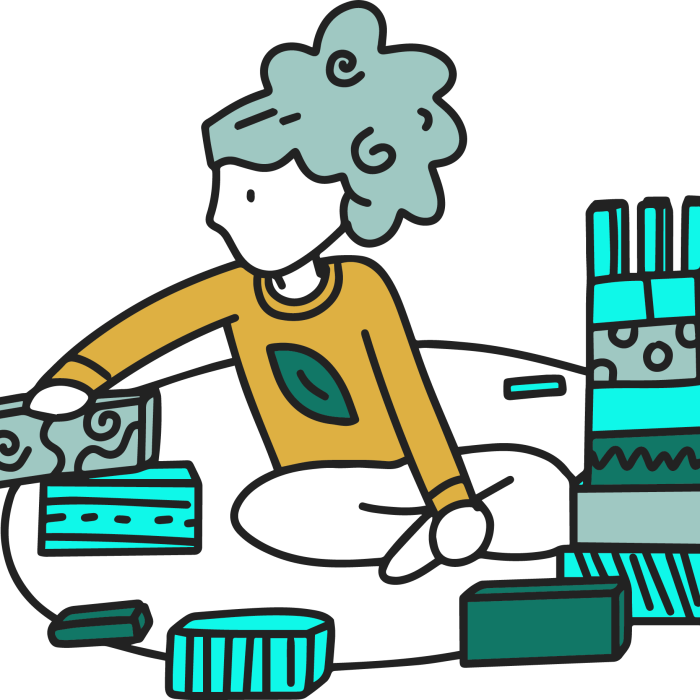
Snack counts, line-up numbers, and weather charts make numeracy routine. Blocks become blueprints for geometry and balance. Nonstandard measurement—paper clips, cubes, hand spans—builds intuition before rulers and scales show up. These lived experiences anchor future math success.
Motor Skills that Power Learning
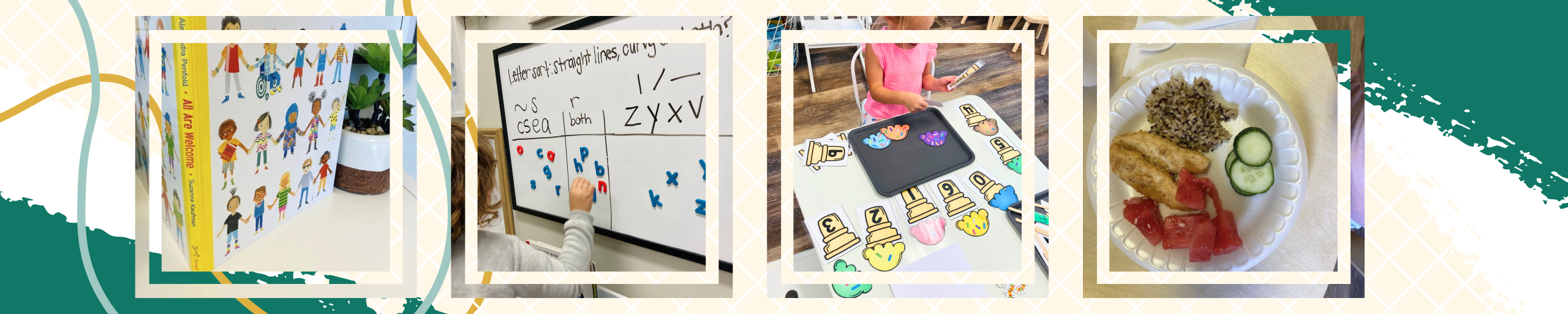
Strong bodies support strong minds. Gross-motor play builds balance and core strength; fine-motor work strengthens hands for writing. You’ll see running, climbing, hopping, and ball play outdoors. Indoors, we cut, pinch playdough, lace beads, and build with small bricks. These skills reduce fatigue at the table and boost focus on tasks.
Simple supports
Offer tongs at the sensory bin, crayons with short barrels, and vertical writing surfaces like easels. Little adjustments pay big dividends in pencil grip and endurance.
Social and School-Readiness Skills
Preschool is a practice field for life in a group. Children learn to take turns, share materials, and solve conflicts with words. We model feelings language (“I feel frustrated because…”) and co-create simple class rules. Routines—clean-up songs, lining up, and putting on coats—build independence. When families ask, “What skills should a child learn in Pre-K?” these social-emotional habits are always on the list.
Partnering with families
We keep communication open, celebrate small wins, and share strategies that work at school and home. Consistency helps children feel safe—and brave enough to try hard things.
Science, Play, and Curiosity
Pre-K science starts with noticing. Children observe insects, mix colors, and wonder why ice melts faster in the sun. We predict, test, and discuss results using real vocabulary—observe, compare, sort, predict. Field walks, seed jars, and sink/float stations make inquiry tangible. Curiosity is the engine; play is the vehicle.
The role of play
Play isn’t a break from learning—it’s the method. In dramatic play, children negotiate roles, plan sequences, and use language for a purpose. In the block area, they test structural ideas and revise designs. These are early engineering labs with laughter.
Creative Arts and Expression
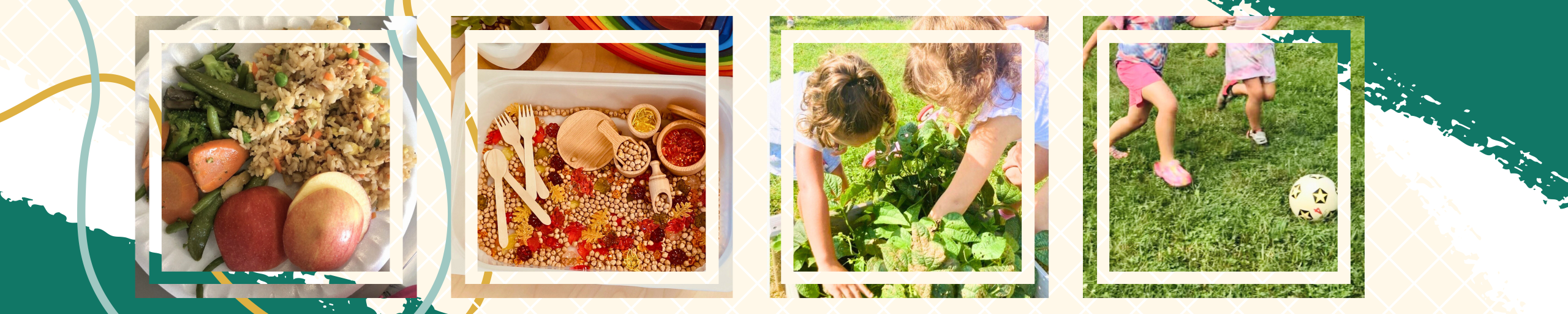
Art, music, dance, and pretend play unlock voice and imagination. Children explore line, color, texture, rhythm, and role. We provide open-ended materials—clay, collage scraps, fabric, instruments—so outcomes are genuinely original. Creativity also shows up in storytelling, invention, and problem-solving. It’s not “extra”; it’s essential.
Why it matters
Art builds perseverance and flexibility. A child who tries three ways to attach cardboard is rehearsing scientific thinking and resilience. Those habits transfer everywhere.
Technology & Hands-On Tools in a Pre-K Program
Technology belongs in Pre-K when it’s purposeful and social. We might document growth with photos, create collaborative ebooks, or explore virtual field trips together. Hands-on tools still lead: magnifiers, balance scales, and ramps help children test ideas face to face. In a quality Pre-K Program, devices support—not replace—curiosity, conversation, and play.
What are pre-k milestones?
Milestones help us notice progress across language, motor, social-emotional, and cognitive domains. We look for growing independence (putting on shoes, washing hands), clearer speech, interest in letters and numbers, and longer attention during group times. Children also become better at waiting, asking for help, and stating feelings. Milestones vary child to child, so we watch patterns, not perfection.
Quick pulse-check (fast, friendly, not exhaustive)
-
Can your child follow two-step directions during play?
-
Do they show interest in letters, rhymes, or name writing?
-
Are they attempting to solve small peer conflicts with words?
-
Can they use scissors safely and control glue with intention?
What should kids know by the end of pre-K?
Expect broad readiness, not rigid mastery. Children typically recognize many letters (especially in their names), count sets with one-to-one correspondence, identify basic shapes, and draw with more control. They can sit for brief group times, follow classroom routines, and express needs clearly. Most important, they leave curious, confident, and ready to keep learning.
A note on timelines
Skill growth isn’t linear. Surges and plateaus are normal, especially around big life changes. We focus on steady progress and joyful participation.
Family Partnerships and Full-day Preschool
Learning accelerates when home and school pull together. Share favorite books, home languages, and family traditions in the classroom. Ask teachers for simple routines to mirror at home. If you’re weighing schedules, a Full-day Preschool can offer longer stretches for projects, outdoor play, and rest—without rushing key moments.
Program Options, Transitions, and Next Steps
Choosing the right setting matters. Some families prefer play-forward Preschool; others choose a structured Pre-K with targeted small groups. To compare models and expectations, this overview helps: The Difference Between Preschool and Pre-K. Whatever you choose, stay curious and stay connected with your child’s teachers. The relationship is the real superpower.
What should a child learn in Pre-K? Bringing it all together
Here’s a fast snapshot of core domains, classroom moves, and what you can try at home. Short and scannable—for when life is busy.
| Domain | Sample classroom skills | Quick at-home prompt |
|---|---|---|
| Language & Literacy | Name writing, story retell, rhyming | “Tell me the beginning, middle, end.” |
| Math & Reasoning | Counting sets, AB/ABB patterns, shape hunt | “How many steps to the door?” |
| Science & Inquiry | Predict, test, explain | “What do you think will happen if…?” |
| Social-Emotional | Sharing, turn-taking, feelings words | “How can we solve this together?” |
| Fine Motor | Cutting on lines, controlled gluing | “Squeeze and snip playdough snakes.” |
| Gross Motor | Hopping, throwing, balance | “Can you hop five times, then freeze?” |
| Creative Arts | Drawing, collage, rhythm patterns | “Make a picture with only circles.” |
| Self-Care | Coat on/off, handwashing, tidy-up | “Let’s race the timer to clean up.” |
What skills should a child learn in Pre-K? (for families planning ahead)
As you look toward kindergarten, keep this question front and center: What skills should a child learn in Pre-K? Aim for a child who is curious, communicative, and increasingly independent. Celebrate progress, model optimism, and keep reading and playing every day. The best preparation is a joyful learner who believes “I can figure this out.”